
Fuel pump dealers in Madhya Pradesh plan to stop accepting UPI payments exceeding Rs 2,000 for petrol and diesel from October 16, citing concerns over the proposed Merchant Discount Rate (MDR). The Confederation of All India Traders (CAIT) has urged the government to reconsider the MDR imposition, warning it could hinder digital payment adoption and impact traders' profits.
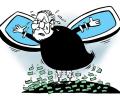
Any forced attempt to achieve anything, however lofty the goal, will result in distortions and undesired outcomes, say Anshuman Gupta and Karunakar Jha.

Taking a dig at Narendra Modi's demonetisation move, Uttar Pradesh Chief Minister Akhilesh Yadav termed cashless economy as a "bigger dream" than 'achche din' and said the note ban will be an issue in the upcoming assembly elections in the state.

The Indian government has introduced a 0.4% transaction fee on UPI payments above Rs 2,000 for merchants, effective October 15, sparking a political row. The Congress party has labelled it a "Modi tax" and accused the government of succumbing to US pressure, while the BJP has defended the move, clarifying that consumers will not be charged and small vendors are protected. The finance ministry reiterated that the charge is on merchants, not customers.

The Congress party has criticised the government's new 0.4% charge on UPI transactions above Rs 2,000 for merchants, terming it a "Modi tax". Opposition leaders, including Rahul Gandhi and Mallikarjun Kharge, allege that this move will ultimately burden consumers through price hikes and accuse the government of succumbing to American pressure to dilute India's zero-MDR policy. The government states the charge will support banks and fintechs.

Dedicated Ayush dispensaries increased from 26,130 in 2013-2014 to 37,804 in 2024-2025, while hospitals rose much more slowly, from 3,605 to 3,885.

The Congress party has criticised the Modi government over a notification regarding UPI transactions, alleging it paves the way for imposing fees, especially on transactions above Rs 2,000. Rahul Gandhi claimed the government is surrendering to American pressure, while Mallikarjun Kharge highlighted the potential burden on common citizens amidst inflation. The government's notification prohibits charges on UPI transactions up to Rs 2,000 but remains silent on higher amounts, sparking fears of a "Digital Payments Tax."
Modi government plans to set up a committee of five or six chief ministers to suggest ways to promote digitisation.

Union Finance Minister Nirmala Sitharaman expressed strong confidence in India achieving over 10 per cent economic growth, advocating for increased technology adoption and innovation. She urged overcoming scepticism and highlighted technology's transformative role in agriculture and public sector reforms, while also launching a new fund and book at an IIT Madras event.

Digital money is gradually starting to behave like software. It's no longer inert -- sitting passively in accounts. In the not-so-distant future, your money could become 'smart' and 'active,' understanding your preferences, paying your bills automatically, optimising your returns, and managing your risks -- all without you having to manage the details.

In efforts to move towards a cashless society, the Reserve Bank on Wednesday said it will come out with a concept paper on promoting electronic payments, especially in smaller towns, by November-end.
Gandhi alleged that the Bharatiya Janata Party government has "blocked" the money of the poor through currency ban to favour a "handful of industrialists".

'The mindset of people needs to change.' 'We still believe in accepting cash when we can do business with digital money as well.'

A large number of people using cards at PoS Cards being used more frequently Small-ticket transactions Mastercard South Asia head Porush Singh calls these the three key trends for a cashless future. And post-demonetization India, he believes, is steadily moving towards it.

Earlier, while presenting the Budget on February 1, Finance Minister Arun Jaitley had proposed to cap cash transactions at Rs 300,000 with effect from April 1.

At a time when the Modi government is attempting to push cashlessness with coercive means, Devangshu Datta explains why cash usage is popular even in nations with good cashless infrastructure.

He said no matter how much evolution happens in technology, India could never become a fully cashless economy.
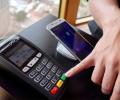

As Narendra Modi and his ministers vigorously campaign for a shift to a cashless society, Rediff.com's Syed Firdaus Ashraf reports on what is really happening on the ground.
Increased income tax collection is going to be a major consequence of going cashless and this should promise a future of lower taxes and higher purchase power soon, says Anil Rego
Now that you have already downloaded mobile wallets and all set to go cashless/digital with your payments to the local grocer, cabbie, maid, etc, here's what you must watch out for, says Tripti Rai.

The prime minister initiated the discussion on the move, which was announced last month, with the ministers after the meeting of the Union Cabinet ended in New Delhi.

"If election is held in the country today, the BJP would draw a nought," the RJD chief said.

M Muneer recommends segmenting the population on the basis of their propensity to embrace new technologies is the key to driving digitisation.
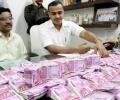
Nearly Rs 3,400 crore (Rs 34 billion) in cash and other items were seized in the elections in 2022-2023, an increase of 835 per cent over 2017-2018.
A senior finance ministry source said making the use of debit cards and e-wallets compulsory across the board is legally untenable, but banks have been asked to insist their account holders use these instruments

Digital payments firm Paytm has earmarked Rs 50 crore for rolling out a cashback program for consumers and merchants to celebrate six years of Digital India, the company said on Friday. Under the offer, Paytm has announced cashbacks for merchants and consumers in India, for every transaction made through the Paytm app. The program will be rolled out in 200 districts across the country with special drives in Karnataka, Kerala, Tamil Nadu, Andhra Pradesh and Telangana.
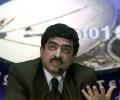
Nandan Nilekani talks about moving towards a cashless economy and freedom of Internet, among others

The RBI refuses to classify a cryptocurrency as an asset since it doesn't have future cash flow and its value is always fluctuating because of speculation. There is also no consumer protection, observes Tamal Bandyopadhyay, and hence the e-rupee trial run.
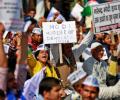
'Those who should have been affected benefitted from demonetisation.' 'And the vast majority who should not have been affected lost out.' 'That is the ultimate result of demonetisation.'
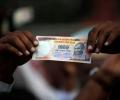
'Once the Hon'ble Supreme Court has declared the law, we are obliged to accept it. However, it is necessary to point out that the majority has not upheld the wisdom of the decision; nor has the majority concluded that the stated objectives were achieved,' the senior Congress leader said in a tweet.

Reducing it to 1.3% would lead to savings of Rs 70,000 crore over 5 years
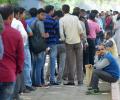
'High denomination cash notes which was 1.4 lakh crores of Rs 500 and Rs 1,000 notes in 2004 became Rs 15.5 lakh crores in 2016.' 'If it had been allowed, by 2022, it would have been Rs 34 lakh crores, and that would have been the end of the Indian economy.' 'Demonetisation was a huge hit on the head of the economy, but without the hit, you could not U-turn the economy.'

Ola Credit will give customers 7 days of credit so they can keep booking Ola cabs without worrying about having sufficient cash

India's Internet economy has two choices: An immediate $30 billion Sale-and-Leaseback or a $3 trillion value harvesting over decades, observes Vibhu Arya.

'They are not tom-tomming what a great thing the Supreme Court decision is.' 'If they say it was a great thing, the public will react because people suffered and are still suffering.'
For those who are sceptical about using debit or credit cards, even when faced with cash crunch, Adhil Shetty, CEO of BankBazaar.com, lists out a few safe cashless options that can be exercised through mobile phones.
Things are expected to change dramatically in a few years for urban consumers.
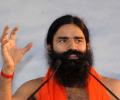
Terming demonetisation as a historic and brave step, he said, black money constitutes 80-85 per cent of the economy and Modiji has taken bold step to solve the issue

While digitisation and automation have made internal processes more efficient, front-end products are being enhanced digitally through robotics, artificial intelligence and botchats.
